Stop pausing videos. Start building.
BuildAR Pro locks clear, step-by-step instructions directly onto real-world objects in 3D space — replacing paper manuals and the endless pause-rewind loop of tutorial videos.
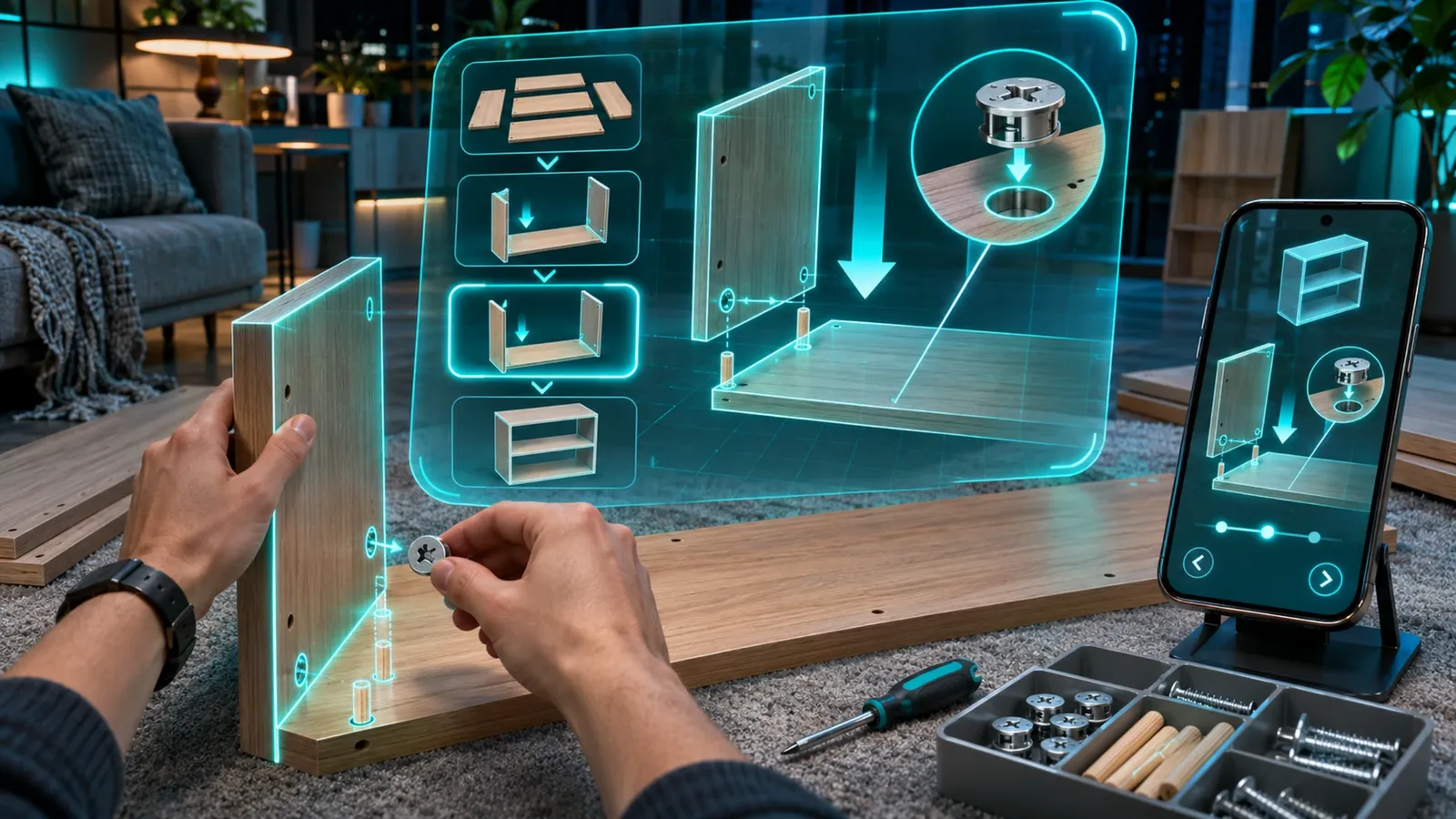
Scan & Retrieve
Scan a package QR code to load human-authored steps from the Lovable CMS database (automated blueprint parsing via LlamaParse + Vision is planned for the roadmap).
Spatial Anchor
The native React Native & ViroReact app identifies the component geometry and locks steps to the real objects.
Guide & Iterate
Move dynamically around the workspace. Anchors adjust in real-time, letting you pause or resume seamlessly.
Contextual AI
Stuck on a diagram? The LLM assistant provides real-time guidance directly integrated into your workspace.
The Core Friction
Flat-pack furniture, DIY kits, and home electronics ship with complex exploded-diagram booklets that are notoriously difficult to map to physical parts lying on a floor. The fallbacks are frustrating: scrolling through YouTube assembly videos, constantly pausing/rewinding, or pure guesswork.
This assembly friction directly damages retail brands. It results in wasted consumer time, improper setup, bad reviews, support center overload, and costly product returns.
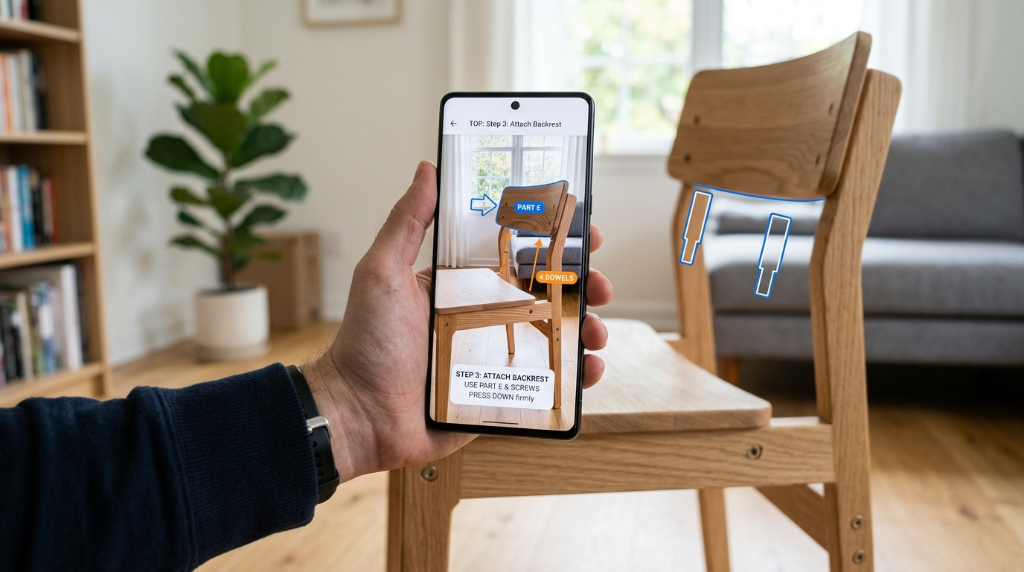
Flat Diagrams
Exploded drawings and confusing layouts that fail to represent true spatial geometry on the floor.
Pause & Rewind Loop
Constantly stopping videos with dirty hands while trying to follow a fast-paced assembly guide.
Costly Support & Returns
Customer frustration translating directly to support tickets, poor star ratings, and returned inventory.
Market Context
Mobile AR capability is standard on modern smartphones. However, the guided-assembly market remains fragmented. BuildAR Pro targets the intersection of B2B delivery channels, creator-built manuals, and contextual AI assistance.
BILT App
Closest named competitor; estimated ~$400M valuation (est.). 3D animated and brand-distributed, not true camera-anchored AR, and no creator marketplace in the current thesis.
IKEA Place & Retail AR
Furniture placement previews and marketing visualization apps. They demonstrate high consumer adoption but do not provide post-purchase assembly guidance.
Venture & Technical Requirements
Consumer Experience (B2C)
- Point camera, auto-identify product, and load interactive AR overlays
- Multi-step progress: resume, forward/back gesture controls
- Cross-platform deployment (React Native for iOS and Android hardware)
- Freemium library model with affordable Pro subscriptions
Brand Platform (B2B)
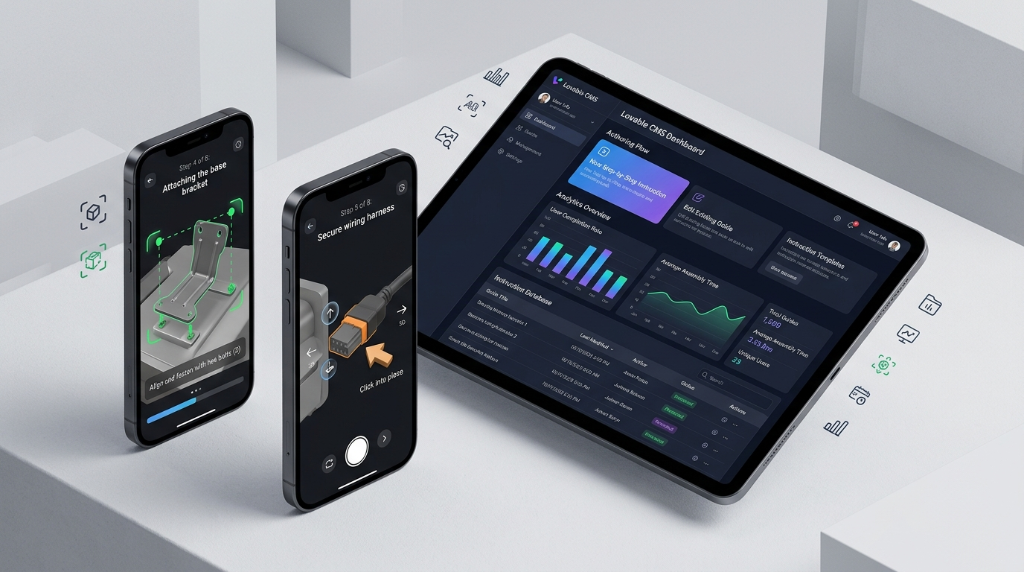
- Lovable CMS: Visual interface for brands to author, test, and publish manuals to database
- Easy distribution: QR codes on packaging, e-commerce emails, retail receipts
- Analytics: tracking drop-offs and assembly friction points
Security & Engineering
- Secure authentication with strict Row-Level Security (RLS) on Supabase
- No privilege escalation paths (resolved during recent security review)
- RTL-ready localization structure for Hebrew/Israeli launch markets
- Uniform API error handling, prompt-injection sanitizers, and secret scanning
Market Sizing & Segments
Market segmentation ranges from global industrial AR infrastructure down to the target bottom-up Obtainable Market (SOM) within the Israeli retail workspace in Year 1.
| Market Layer | Estimated Size | Calculation Basis / Data Source |
|---|---|---|
| TAM (Total Addressable Market) | ~$80.4B → $631B (est.) | Industrial AR market size projections, EOY 2024 to 2030 (MarkNtel; Mordor) |
| Market Backdrop | Global DIY backdrop: ~$800B -> ~$1.4T (directional est., source to confirm before investor use) | Global consumer DIY retail baseline (directional figures to confirm) |
| SAM (Serviceable Addressable Market) | 2B+ (est.) devices | Active AR-capable iOS/Android phones globally (Statista / ARtillery 2025) |
| Launch SAM (Local focus) | Not yet sized | DIY customers in target regional markets (Israel launch) — DATA GAP |
| SOM (Serviceable Obtainable Market) | 3k→35k subscribers | Year 1 to Year 3 target reach based on local pre-seed launch pipeline projections |
Go-to-Market & Business Strategy
B2B-First Distribution
Brands market the app directly to their buyers, reducing B2C CAC near $0. B2B contracts generate higher margins (LTV/CAC 2-7x) to subsidize consumer growth.
Israel Launch Sandbox
Leverage accessible retail decision-makers and localized distribution loops in Tel Aviv. Launch targets include ACE, HomeCenter, IKEA Israel, and local chains.
Library to Marketplace
Launch with a curated database of top retail product guides, then transition to a crowdsourced creator marketplace to build a network effect.
Lean Cost Structure
Core 3-person team funded against verified local market salary rates (PayScale IL / Glassdoor IL 2026), structured at a 3.05 NIS/$ baseline exchange rate.
The Technical Solution
Architectural Overview
BuildAR Pro connects a cross-platform React Native mobile client with a Fastify/Supabase cloud database, playing back human-authored guides created in the Lovable CMS, with automated AI parsing planned on the roadmap.
- CMS-Authored Steps: Manuals are structured by brands or creators in the Lovable CMS dashboard, mapping text, order, and 3D overlay assets directly to database schemas.
- React Native & ViroReact: The cross-platform mobile app displays instructions in 3D AR overlays anchored to the physical world.
- Supabase & Fastify: Safe authentication, project step storage, strict PostgreSQL Row-Level Security (RLS), and unified error handling backend.
- LlamaParse + Google Vision (Roadmap): Planned pipeline to parse legacy PDF manuals for structural hierarchy and layout coordinates to automatically generate guide steps.
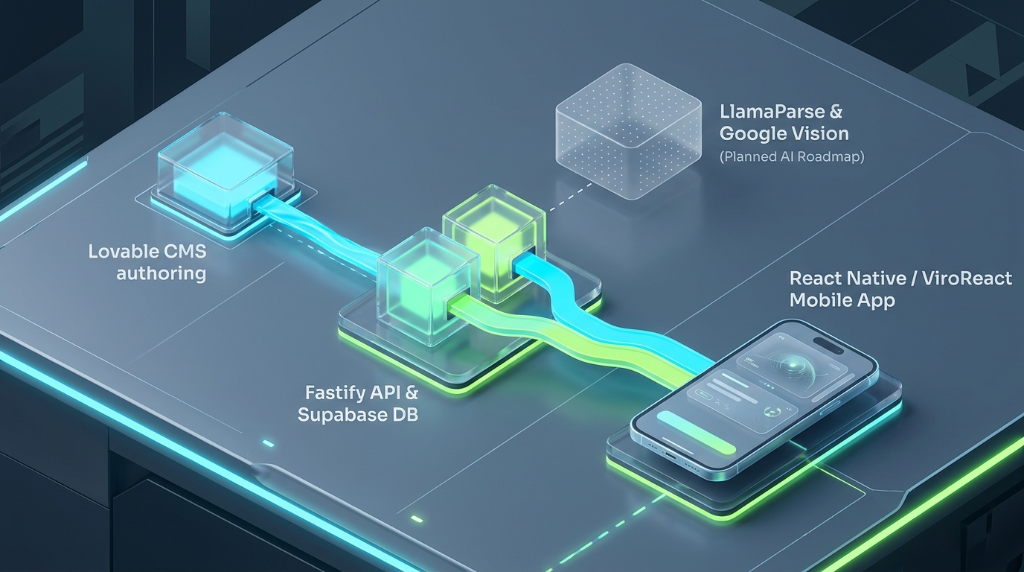
Mobile Client & CMS
Mobile: React Native (0.74) + ViroReact AR framework. Fully localized with RTL-ready view structures for Hebrew support. CMS: React-based authoring tool deployed via Lovable sandbox.
API & Security
Database: Supabase (PostgreSQL with strict RLS policies). Backend APIs run Fastify 5.x on Railway. Built with secure authentication, prompt-injection sanitizers, and CI gitleaks scanning.
Financial Projections
Operational costs and market projections are calculated from local market data: Israeli engineering salaries (PayScale IL / Glassdoor IL), coworking offices (WeWork Tel Aviv), development equipment (iDigital/Apple IL), and a 3.05 NIS/$ exchange rate. Customer CPI assumptions: iOS $4.70 / Android $3.70 (Business of Apps). There are currently no active revenues.
Freemium to Pro
Free standard assembly guides. Pro library access modeled at $4.99/month. Price optimization tests scheduled at Year 2 ($7.99/mo) to address early B2C LTV margins.
SaaS per Retail Brand
Setup integration fees plus monthly subscription tiers: Small Retailer ($500-800/mo), Mid-sized Chain ($1,200-2,000/mo), Enterprise/IKEA-scale ($2,500-5,000/mo).
Illustrative Projections (Pessimistic Scenario)
| Growth Metrics | EOY 1 | EOY 2 | EOY 3 |
|---|---|---|---|
| B2C Pro Subscribers | 3,000 | 9,000 | 35,000 |
| Active B2B Brands | 3 | 12 | 30 |
| Annual Cash Inflow | ~$35K | ~$430K | ~$1.87M |
| Ending Run-Rate ARR | ~$216K* | ~$775K | ~$2.9M |
| Net Profit / Loss | heavy loss | -$420K | +$520K |
*Calculated based on a $17,970 MRR exit run-rate at EOY 1. Estimated cumulative loss to break-even is $1.95M, targeting self-sustainability between Month 30 and 33.
Future Horizons
Prove the Distribution Loop
Deploy the native iOS application, integrate the first Israeli retail chains, validate organic installer CAC metrics, and run B2C subscription pricing tests.
Open the Creator Marketplace
Deploy the custom visual editor tool, open the creator library revenue-share platform, scale B2B BD teams into European markets, and secure Series A round.
The Default Spatial Instructions Layer
Establish BuildAR Pro as the standard visual manual interface for home assembly, hardware installation, and consumer appliance repair.
The default AR interface to build, assemble, or repair anything.
A global platform where brands and creators publish clear, localized, step-by-step spatial manuals, allowing any user to instantly scan an object and navigate its construction.